Bridging Multilingual Audiences: Solving the “One Speaker, Many Languages” Challenge in Live Events

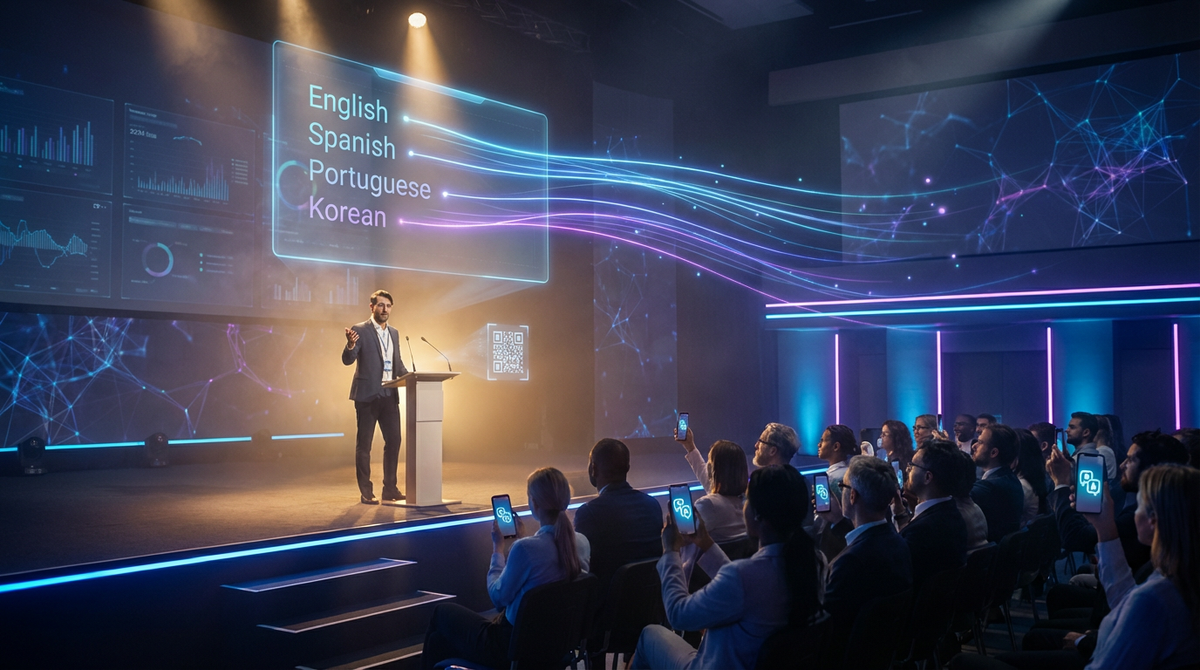
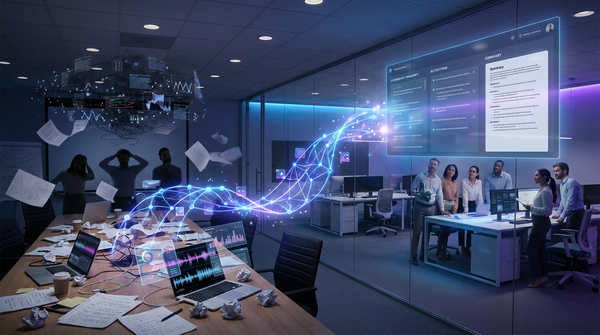
Live events — whether they take place in churches, hotels, conference centers or corporate rooms — share a common challenge: one speaker cannot naturally communicate in all the languages represented in the room.
For decades, the most common assumption has been: “We will speak in one language, and hopefully everyone will follow.”
But as communities become more diverse, and events attract participants from different linguistic backgrounds, this assumption no longer holds. Attendees who do not understand the primary language miss essential information, feel disconnected and often do not return.
AI-powered multilingual audio changes this dynamic entirely. It enables one speaker to be understood in multiple languages at once — without booths, interpreters or specialized equipment.
The Communication Gap in Modern Events
Even small gatherings can include a surprising range of languages.
A church may have:
- Brazilians,
- Americans,
- Hispanics,
- Filipinos,
- Koreans.
A hotel conference room may be booked by:
- international companies,
- multicultural non-profits,
- families or groups from abroad.
Corporate meetings increasingly involve remote participants who speak different native languages.
The result is a communication gap that traditional systems are not prepared to solve without cost and complexity.
A Real Scenario: One Message, Three Audiences
Imagine a church service in English. Among the audience are:
- a Brazilian couple visiting for the first time,
- a Spanish-speaking family,
- and a group of international students who speak mostly Korean.
Only one group fully understands the message.
The others:
- try to guess the meaning from context,
- feel uncomfortable asking for help,
- or simply disengage.
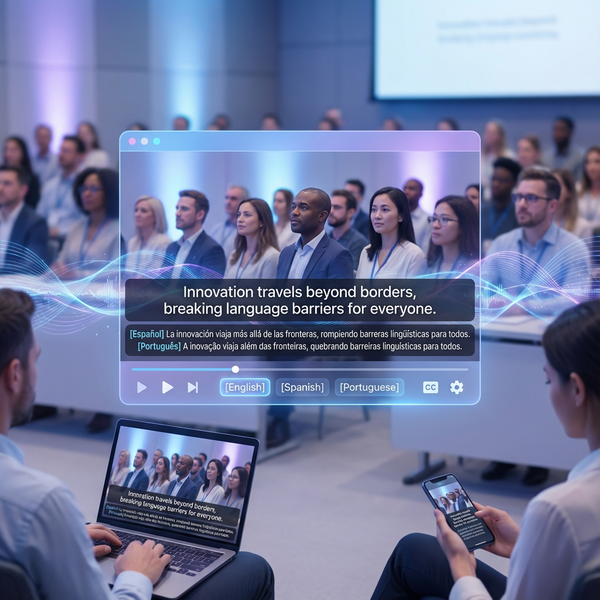
But when translation is offered through TransVoicely:
- the Brazilian couple listens in Portuguese,
- the Spanish-speaking family listens in Spanish,
- the Korean students listen in Korean,
- and the pastor continues preaching in English without interruption.
No booths.
No headsets.
No extra interpreters.
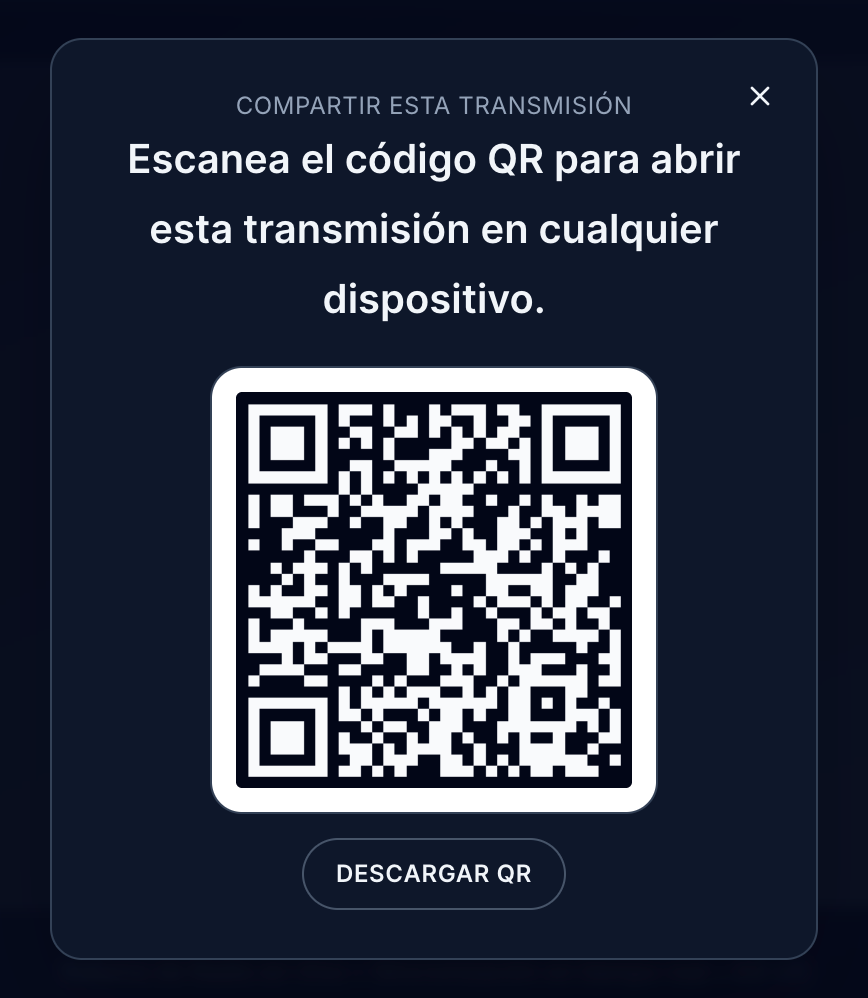
Just a link or QR code.
How Multilingual Audio Works in Practice
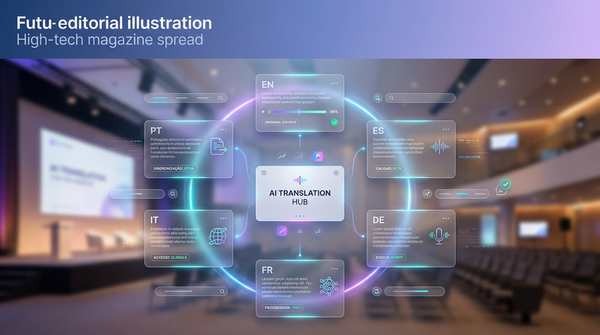
TransVoicely solves the “one speaker, many languages” problem with a simple pipeline:
- Real-time transcription: The speaker’s message is converted into text instantly.
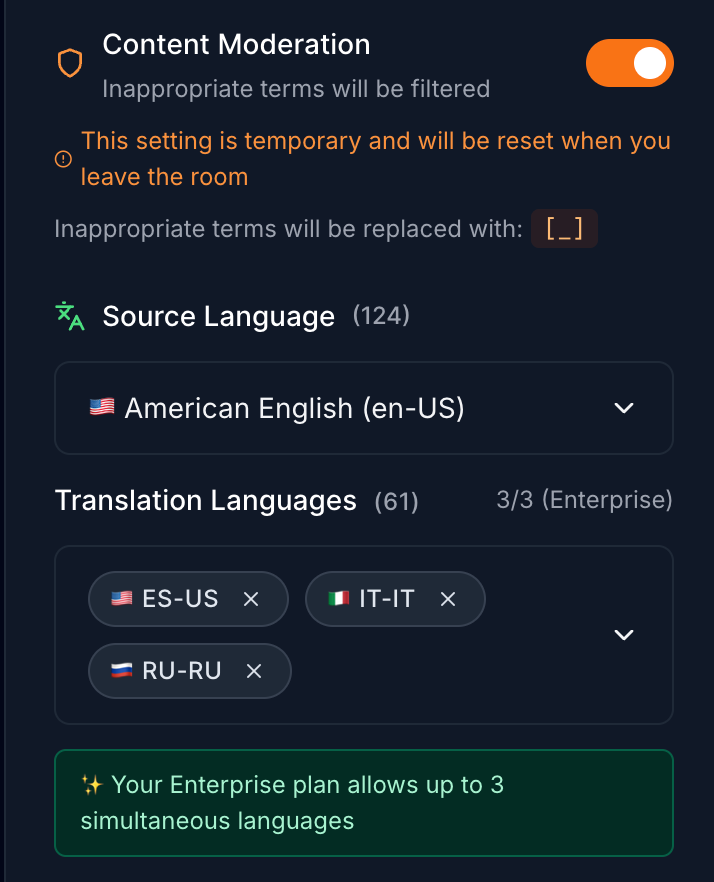
- Automatic translation: The text is translated into up to three languages simultaneously.
- Natural voice synthesis (TTS): Each translation is spoken aloud using high-quality AI voices.
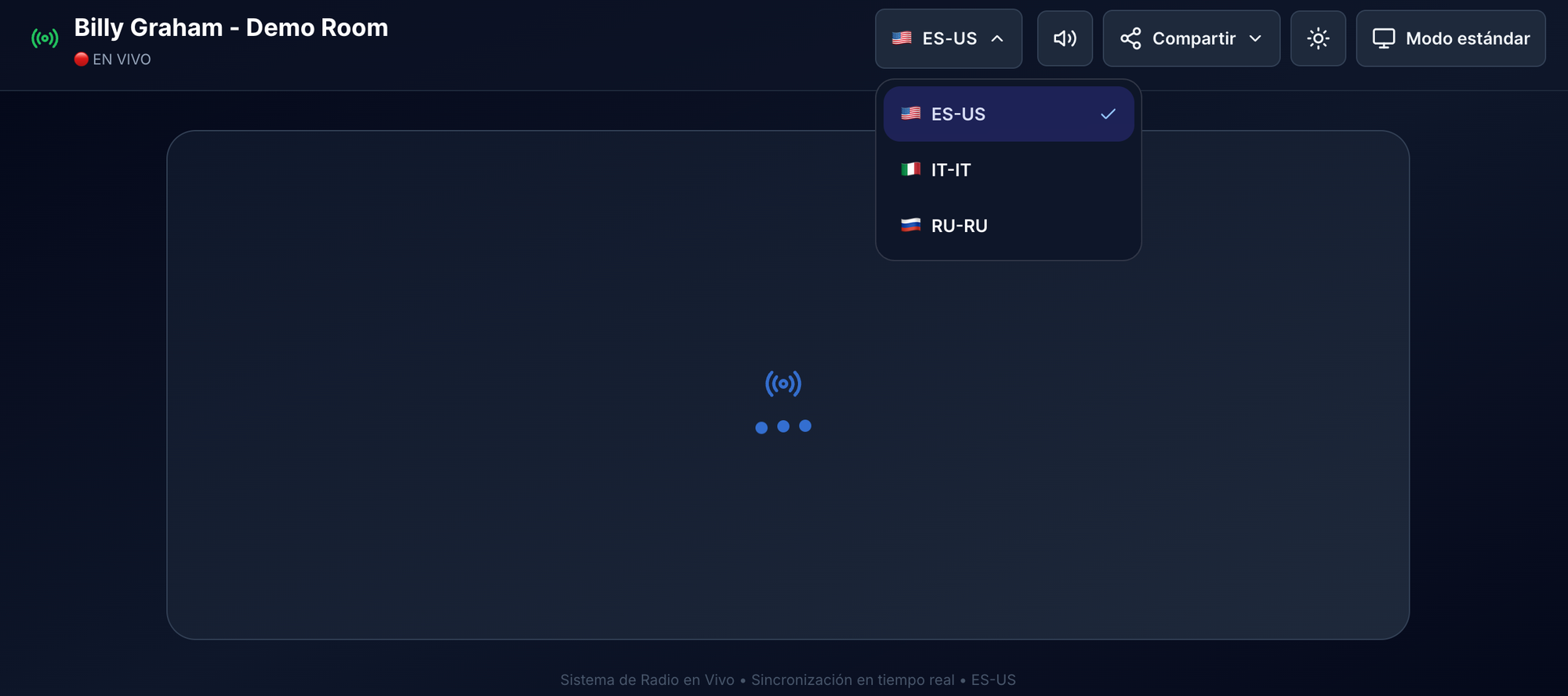
- Distribution to listeners: Participants open the public player on their phones and select their language.
Within seconds, your event becomes multilingual — naturally and automatically.
Why This Matters for Churches, Conferences and Hotels
For churches
- Visitors feel welcomed.
- Members from different countries stay engaged.
- Ministries expand their reach without additional staff.
For conference venues and hotels
- Multilingual events become a service offering.
- Clients can host international groups without hiring interpreters.
- The venue becomes more competitive and attractive to global organizations.
For corporate events
- Meetings become inclusive.
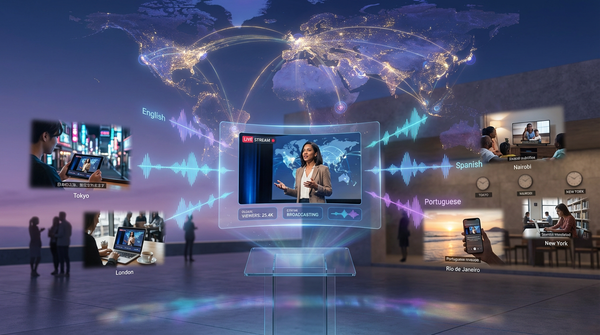
- Remote workers across countries receive the same information at the same time.
- Productivity increases, misunderstandings decrease.
Beyond the Event: Lasting Impact
Providing multilingual access is not only a technical upgrade — it is an investment in community, hospitality and clarity.
People return to places where they feel understood.
Organizations grow when they remove barriers.
Messages have impact when they reach everyone — not just one group.
Conclusion: TransVoicely Enables True Multilingual Experiences
The challenge of “one speaker, many languages” will only intensify in an increasingly globalized world.
TransVoicely turns this challenge into a strength, enabling events to:
- communicate clearly,
- welcome diverse audiences,
- expand reach,
- and operate with excellence.
Multilingual communication is no longer optional — it is a defining feature of modern events.
And now, it is accessible to anyone.