Making Messages Accessible: Multilingual Subtitles for Global and Local Audiences
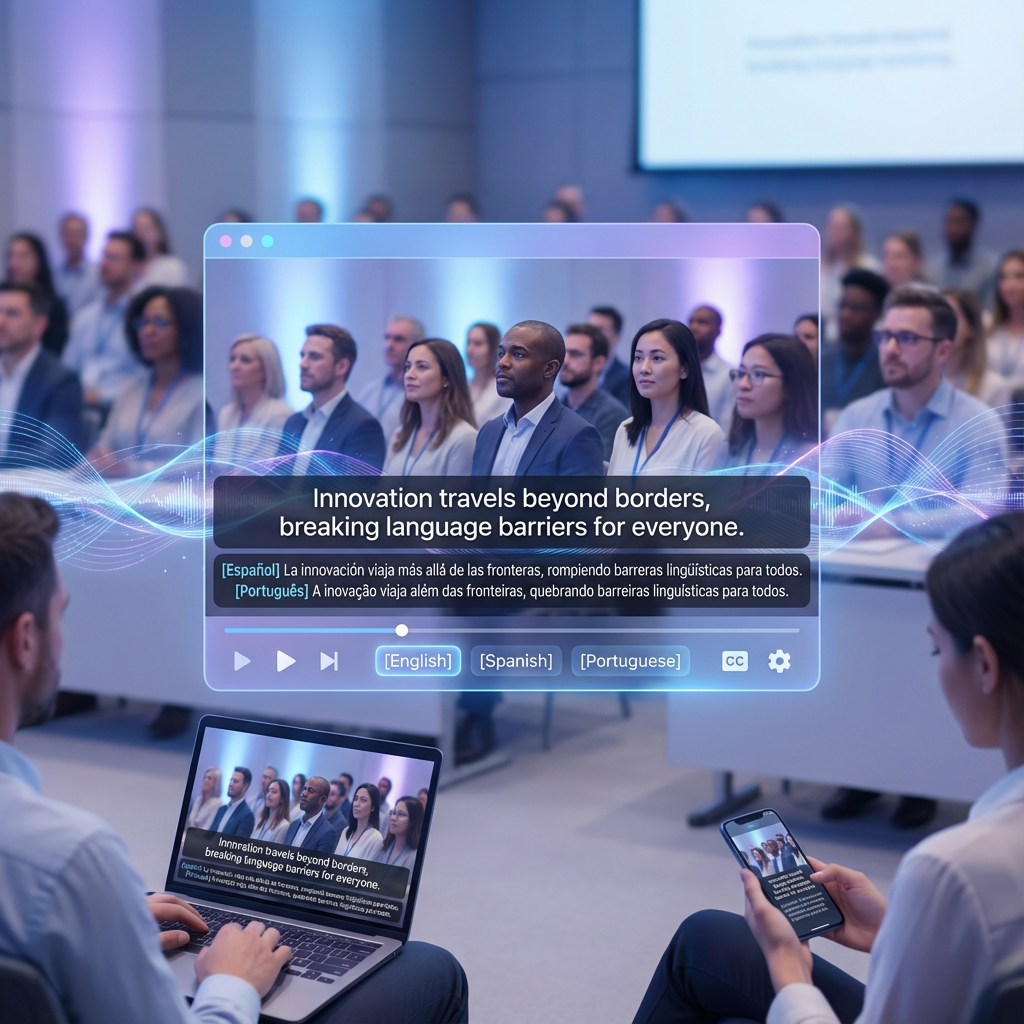
When people think about subtitles, they often think of streaming platforms, films in foreign languages or entertainment content. But subtitles have become a crucial accessibility resource far beyond entertainment.
In live events, recorded sermons, corporate trainings and community gatherings, subtitles play a significant role in making messages understandable to:
- people who do not speak the primary language of the event,
- individuals with partial or total hearing loss,
- viewers watching without sound (on mobile or in public spaces),
- and people who simply understand and retain information better when they can read and listen at the same time.
Multilingual subtitles transform a single message into something more inclusive and more widely accessible.
Accessibility Is No Longer Optional
Many organizations recognize the importance of streaming or recording their events, but not all consider the accessibility layer that comes after.
Without subtitles:
- a participant who struggles with the spoken language may lose most of the content;
- a person with hearing difficulties may be excluded from the experience;
- someone watching in a noisy or silent environment may miss key points because they cannot fully follow the audio.
In a global and digital context, accessibility is not a peripheral concern. It is central to how messages are received and how communities are built.
A Real-Life Scenario: When a Visitor Can See, But Not Hear or Understand
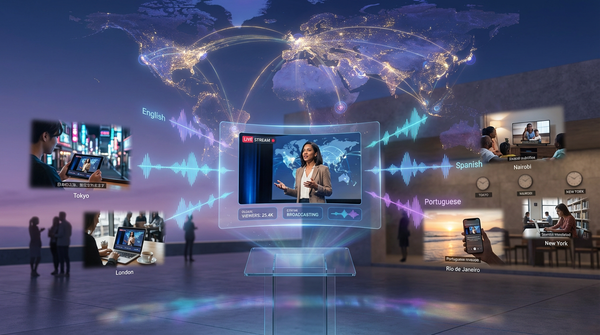
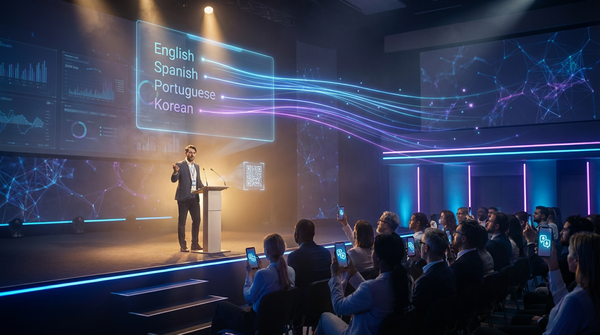
Imagine a conference held in English, with participants attending both in person and online. Among the audience are:
- a family who primarily speaks Spanish,
- a young adult with partial hearing loss,
- and several people following the stream on their phones with the volume low or muted.
If there are no subtitles, each of these groups faces a barrier:
- the family must guess the content from visual cues;
- the young adult struggles to follow incomplete audio;
- mobile viewers miss entire sections when they cannot listen.
By enabling multilingual subtitles, the situation changes:
- English subtitles support those who are hard-of-hearing or following without audio;
- Spanish subtitles allow the family to fully engage with the content;
- replays with subtitles make the same session usable for people who could not attend live.
What was once a single-language, audio-dependent experience becomes a multi-access path to the same message.
From Live Speech to Structured Subtitles
Creating subtitles manually is a time-consuming and technical task. It typically involves:
- transcribing the audio,
- splitting the text into segments,
- assigning timestamps,
- and manually formatting files in
.srtor.vtt.
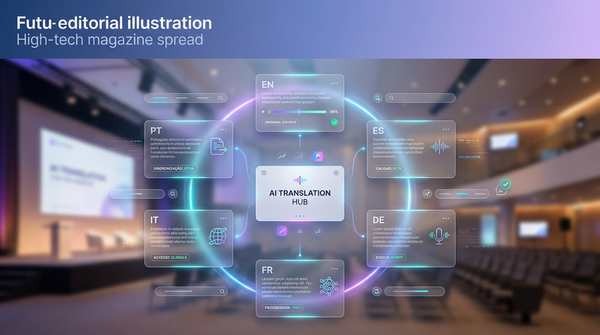
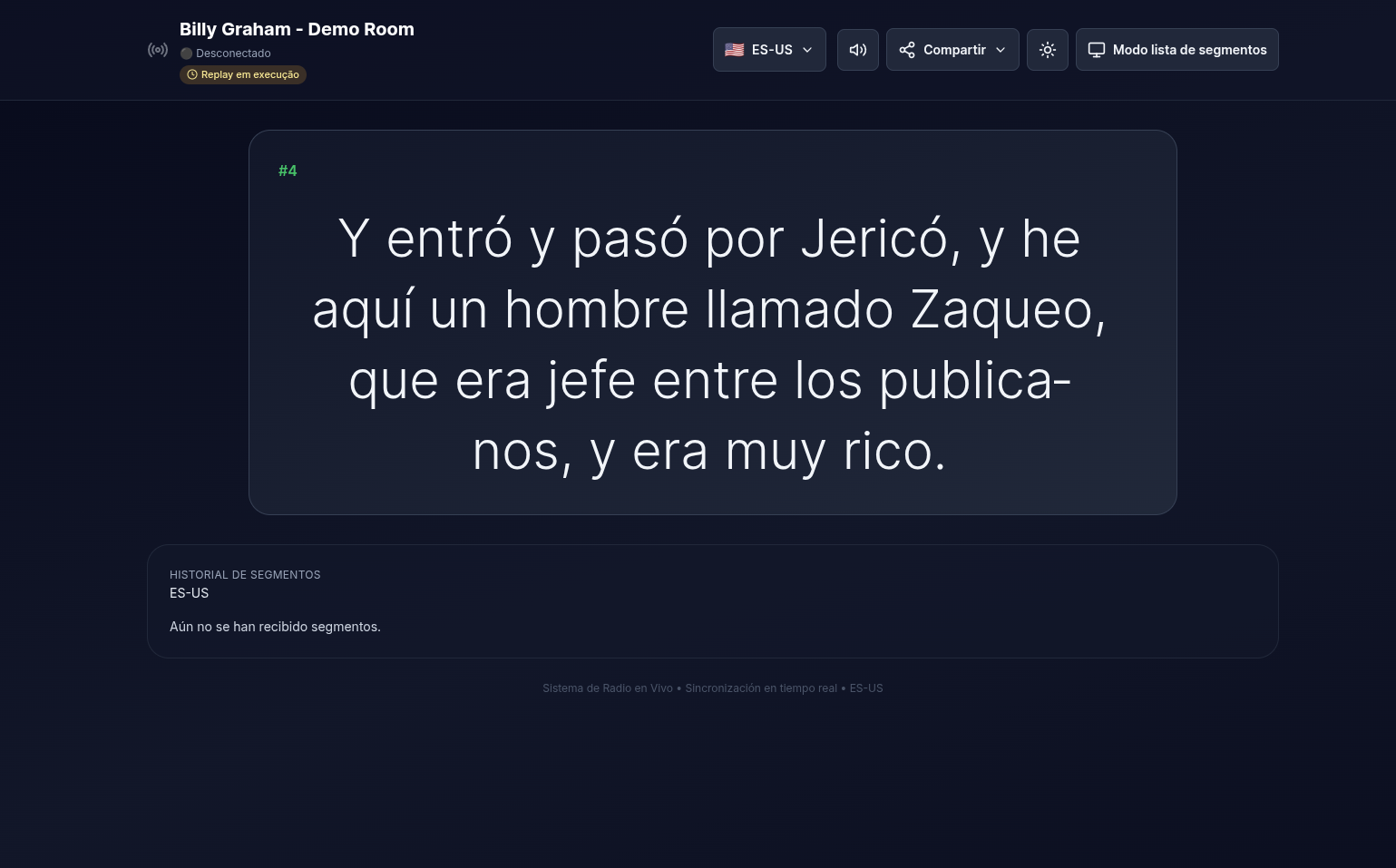
AI-based platforms like TransVoicely automate this process by using the same pipeline that powers real-time transcription and translation. The general flow is:
- Transcription: speech is converted into text, with timestamps for each segment.
- Translation (optional): the text is translated into one or more target languages.
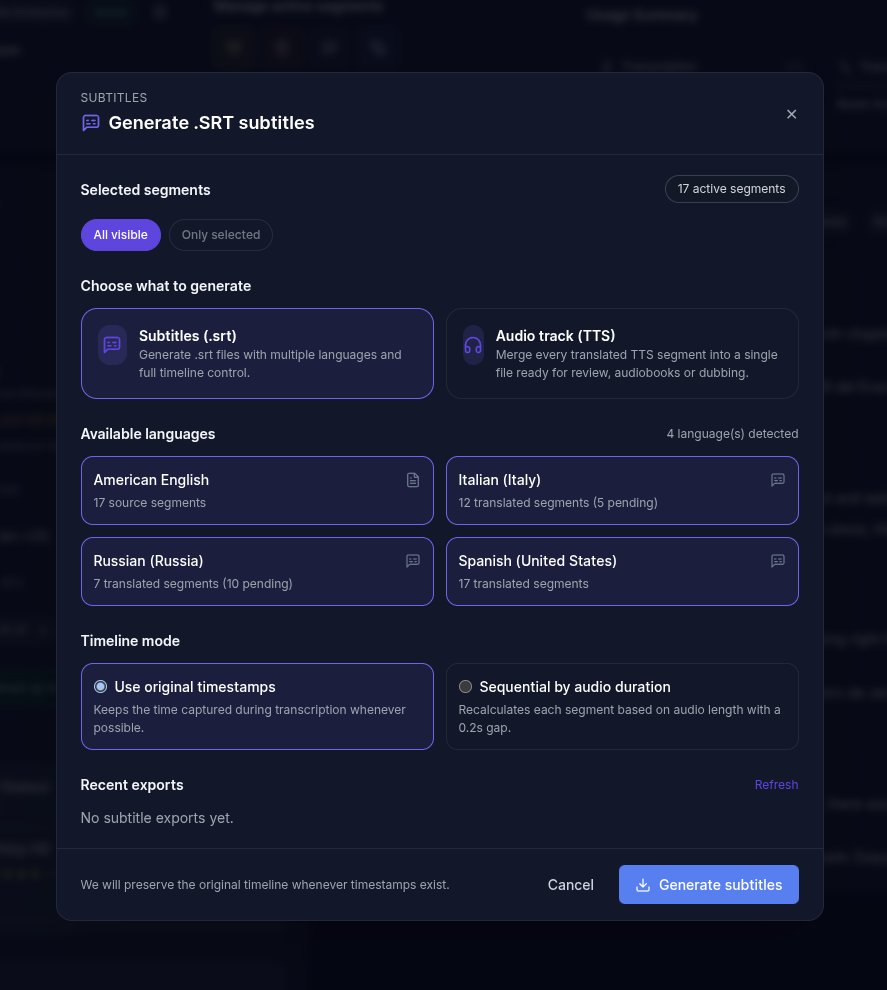
- Subtitle generation:
.srtor.vttfiles are created for the original language and for each translation, using the timestamps to keep everything synchronized.
The result is a set of subtitle files that can be attached to videos on platforms such as YouTube, embedded players or internal media systems, without the need for manual subtitle editing.
Why Subtitles Matter Beyond International Audiences
Subtitles are often associated with multilingual support, but their value extends much further:
- Accessibility for people with hearing loss: Subtitles allow individuals who are deaf or hard-of-hearing to follow the content in detail.
- Silent viewing: In offices, public spaces or at home late at night, people frequently watch videos without sound. Subtitles make this possible without losing context.
- Learning and retention: Some viewers understand better when they can read and listen simultaneously, especially in a second language.
- Searchability and reuse: Subtitled content is easier to index, search and reuse, since the text can be analyzed and referenced.
For churches and organizations that care about inclusion, subtitles are an important expression of that commitment.
Turning Your Archive into a Multilingual Video Library
Subtitles are not only useful for live or recent events. They can also unlock the potential of an existing archive.
By processing past recordings through transcription, translation and subtitle generation, an organization can:
- transform years of sermons, talks or trainings into a multilingual video library,
- enable people from different linguistic backgrounds to access historical content,
- and repurpose older material for new audiences and platforms.
This process does not require re-recording or recreating the content; it simply adds a new, accessible layer to what already exists.
Implementation: SRT, VTT and Modern Video Platforms
From a technical standpoint, subtitles are delivered primarily in two formats:
- SRT (.srt): a widely supported, simple text-based format used by most video players.
- VTT (.vtt): a web-oriented format compatible with HTML5 video, with additional styling options.
A platform like TransVoicely can generate both, based on the same transcription and translation data. These files can then be:
- uploaded to YouTube or similar platforms as subtitle tracks in different languages,
- attached to internal video players,
- or provided as downloadable resources for offline viewing.
For end-users, the experience is straightforward: they select their preferred subtitle language and follow along.
Reaching People Where They Are, in the Way They Can Receive
At the heart of multilingual subtitles is a simple idea: people receive messages in different ways.
Some need another language. Some need text instead of audio. Some need both.
By taking advantage of AI-based transcription, translation and subtitle generation, organizations can adapt their communication to these different needs without multiplying their workload.
For churches, conferences, educational institutions and companies, this is more than a technical upgrade. It is a practical way to honor the diversity of their audience — global or local — and ensure that the message is not only delivered, but truly understood.