Why Streaming Alone Isn’t Enough: The Case for Multilingual Audio in Modern Ministries and Events

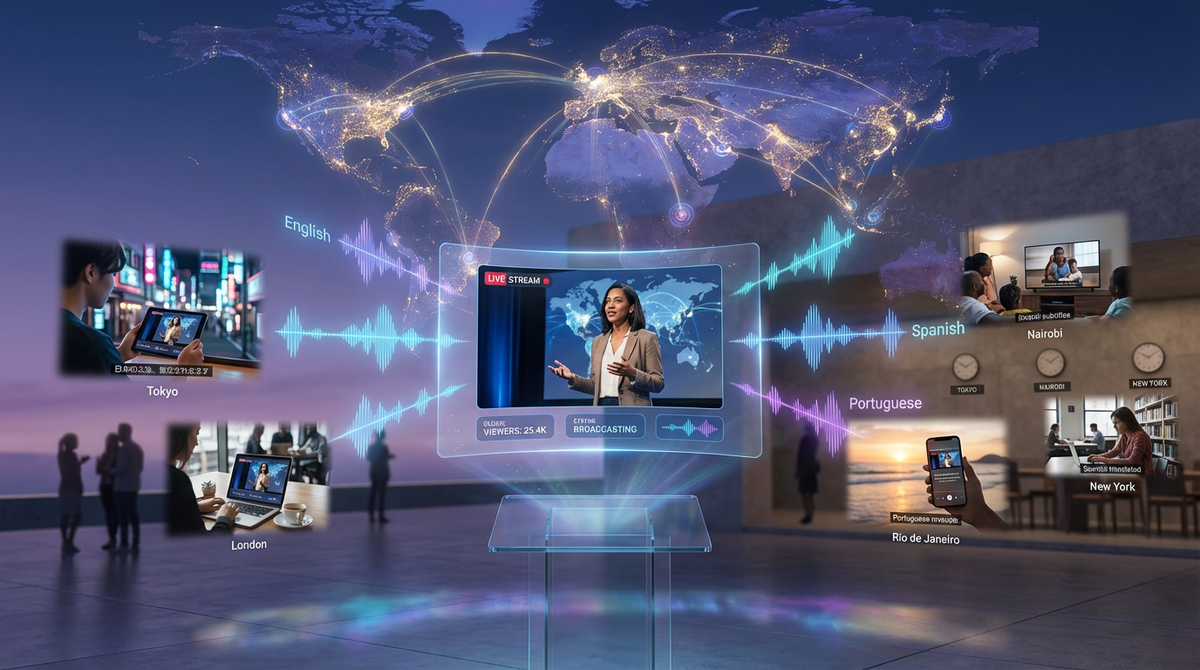
In many churches, ministries, conferences and corporate settings, livestreaming became essential. Today, most organizations broadcast their services, meetings or events online.
However, livestreaming alone solves only one part of the communication challenge.
The message is transmitted — but only in one language.
For multilingual communities, this leaves a significant portion of the audience unable to fully understand or engage with the content.
In other words:
you can be live everywhere, but still not be understood by everyone.
The Limitations of Single-Language Streaming
A church streaming in Portuguese may have:
- members who moved to the United States or Europe,
- local visitors who speak mostly English or Spanish,
- partners in other countries following the ministry.
A conference streaming in English may attract:
- viewers in Latin America,
- audiences in Asia,
- international collaborators.
A corporate team broadcasting internal meetings may include:
- employees in the US,
- teams in India,
- partners in Mexico or Brazil.
When streaming is available only in one language:
- the international audience is excluded,
- the message loses reach,
- and the opportunity for global impact is significantly reduced.
A Real Scenario: A Church with a Global Diaspora
Consider a church based in Brazil that streams every service on YouTube. Over time, many members move abroad — to the United States, Portugal, Japan or the UK.
They continue watching online, but:
- their families do not fully understand Portuguese,
- their children barely speak the language,
- local visitors who join them cannot follow the livestream.
The message becomes geographically accessible, but linguistically restricted.
When the church enables multilingual audio through TransVoicely:
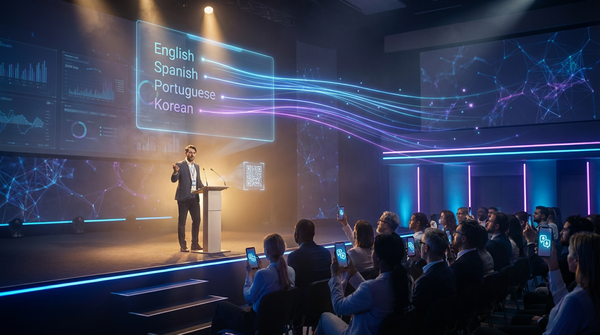
- the stream can offer Portuguese, English and Spanish simultaneously,
- the family abroad can share the service with friends who speak other languages,
- the global audience grows organically.
Streaming reaches people.
Multilingual audio connects people.
Why Multilingual Streaming Matters
1. It increases global reach
One message becomes accessible to multiple countries without re-recording or editing.
2. It strengthens local inclusion
Visitors and second-generation families can follow the message in the language they are most comfortable with.
3. It supports missions and international communities
Ministries with global presence can unify their message across borders.
4. It enhances corporate communication
Multinational teams receive the same content at the same time, reducing misunderstandings.
How TransVoicely Enables Multilingual Broadcasts
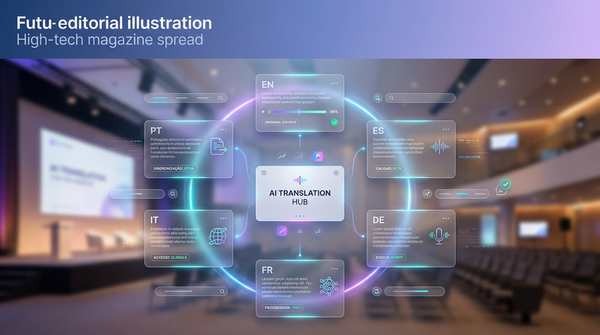
TransVoicely extends livestreaming with:
- Real-time translation in up to three languages
- AI voice synthesis (TTS) to speak those languages naturally
- A public player accessible by link or QR code
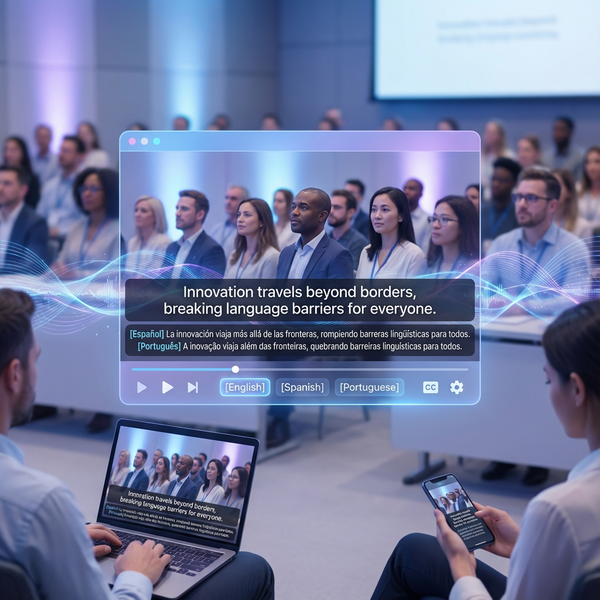
- Live subtitles in each language
- Replay options with multilingual audio included
- Integration with existing streaming platforms
In practice, your event can be broadcast in multiple languages without additional interpreters or post-production work.
The Future of Digital Ministry and Events Is Multilingual
Audiences today are not defined by geography — they are defined by language.
If your content is stuck in a single language, it is unintentionally excluding thousands of people who could benefit from it.
Organizations that embrace multilingual streaming:
- expand their influence,
- strengthen their communities,
- and communicate with excellence in a global world.
Streaming allows you to go far.
Multilingual audio allows your message to reach.